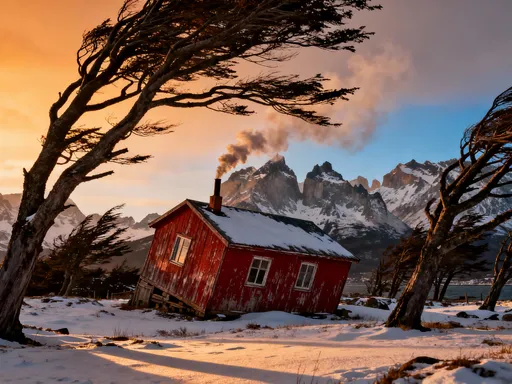
Hidden Corners of Ushuaia: Where Forgotten Walls Tell Southernmost Stories
You know that feeling when a place just talks to you? Not with words, but through cracked wooden facades, tilted chimneys, and doors worn by decades of Patagonian winds? That’s Ushuaia beyond the postcards. Far from the cruise ship crowds, tucked between mountain shadows and quiet backstreets, stand forgotten buildings with soul. I wandered where few tourists go and found architecture that doesn’t just survive — it remembers. This is not just the end of the world. It’s where stories are carved into every beam and brick. In these quiet corners, history breathes in the rust of iron roofs, the groan of warped floorboards, and the way sunlight catches a chipped windowpane. Here, in Argentina’s southernmost city, the built environment tells a deeper tale — one of resilience, adaptation, and quiet endurance against the edge of the known world.
Beyond the Brochure: The Real Face of Ushuaia
Most travelers arrive in Ushuaia with a checklist: board a cruise to Antarctica, ride the End of the World train, snap a photo at the iconic signpost declaring “Fin del Mundo.” These are worthy experiences, but they skim the surface of a city shaped by isolation, survival, and a rugged frontier spirit. The true character of Ushuaia lies not in its tourist hubs, but in the narrow lanes and sloping alleys where time moves slower and the wind carries more than just cold. Here, wooden houses perch on steep inclines like sentinels, their foundations braced against landslides and decades of relentless weather. These neighborhoods — often overlooked — are where the city’s soul resides, embedded in the grain of old timber and the tilt of a sagging porch.
Ushuaia’s origins as a penal colony in the late 19th century laid the foundation for its utilitarian architecture. The first buildings were not designed for beauty, but for function: shelter against subzero temperatures, gale-force winds, and months of near-constant rain. The earliest settlers, including missionaries and prisoners, built with what they could find — local lenga and coihue wood, corrugated metal, and stone. There was no room for ornamentation; every nail and beam served a purpose. This legacy endures in the city’s older districts, where houses still follow that same principle of necessity over flourish. Unlike the colorful, polished facades near the port, these homes bear the marks of time without apology — peeling paint, patched roofs, and doors that no longer close flush. Yet in their imperfection, they radiate authenticity.
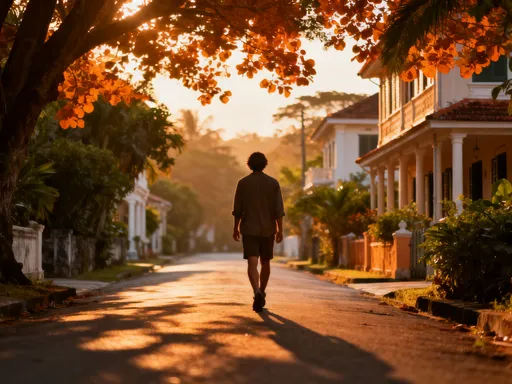
Walking through barrios like Villa Llao Llao or the upper reaches of Martial, one senses a different rhythm. The air is quieter. The footprints in the snow belong more to locals than visitors. These are not postcard-perfect streets, but they are alive with the pulse of everyday life. Children walk to school wrapped in thick wool, elders sit by windows watching the weather roll in from the Beagle Channel, and dogs patrol yards enclosed by hand-built fences. The architecture here doesn’t shout; it murmurs. It speaks of generations who learned to live with the land rather than conquer it. To understand Ushuaia, one must step beyond the curated experiences and listen to these whispers — to see the city not as a destination, but as a living archive of human adaptation at the edge of the map.
The Language of Wood: Craftsmanship in a Harsh Climate
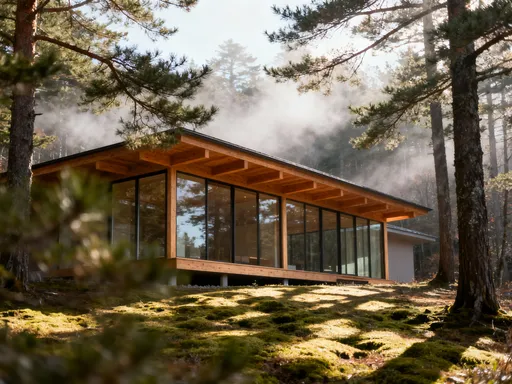
In Tierra del Fuego, wood is more than a building material — it is a language. The way planks are joined, the angle of a roof pitch, the depth of eaves — each decision reflects centuries of adaptation to one of the most unforgiving climates on Earth. Traditional construction in Ushuaia relies on thick, hand-planed timber, often cut from native hardwoods known for their density and resistance to rot. These beams form walls that insulate against the cold and withstand the lateral pressure of Patagonian gusts, which can exceed 100 kilometers per hour. The roofs, steeply sloped to shed snow and rain, are clad in corrugated metal or wooden shingles, their surfaces weathered to a soft silver-gray by salt and wind.
What sets Ushuaia’s wooden architecture apart is not just its durability, but its subtle craftsmanship. Early builders, many of them European immigrants, brought with them design traditions from Scandinavia, the British Isles, and Central Europe. But they quickly learned that imported styles needed modification. Half-timbered facades were abandoned in favor of solid plank walls. Delicate cornices gave way to deep overhangs that protect doorways from snowdrifts. Windows, once large and decorative, became smaller and more strategically placed to minimize heat loss. The result is a hybrid aesthetic — one that feels familiar yet distinctly of this place. In neighborhoods like Las Palmas and República de Lituania, this fusion is still visible in surviving homes where hand-carved eaves, dovetail joints, and wrought-iron hinges speak of care and skill.
One does not need to be an architect to appreciate these details. A closer look reveals the fingerprints of individual builders — the slight variation in nail spacing, the curve of a hand-turned porch post, the way a doorframe has settled unevenly over time. These are not flaws, but signatures. In a world increasingly dominated by prefabricated materials and uniform design, such handcrafted imperfections are a form of resistance — a quiet insistence on individuality and endurance. Even as newer homes rise with modern insulation and double-glazed windows, many residents still choose wood for its warmth, both literal and emotional. It is a material that ages gracefully, gaining character rather than decay. In Ushuaia, wood does not merely build homes; it tells the story of people who learned to shape their environment without losing respect for its power.
Modest Monuments: The Soul of Simple Structures
Not all landmarks are grand. In Ushuaia, some of the most meaningful sites are unassuming — old railway sheds with sagging roofs, repurposed customs outposts with faded signage, and abandoned guard stations perched on remote ridgelines. These structures were never meant to impress. They were built for duty: to house tools, store supplies, or monitor the movement of ships through the Beagle Channel. Yet today, stripped of their original functions, they stand as silent witnesses to the city’s layered past. There is a dignity in their simplicity, a kind of quiet heroism in the way they continue to stand despite decades of neglect.
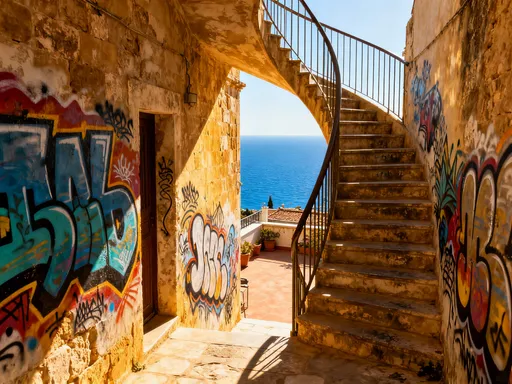
Take, for example, the old maintenance shed near the southern terminus of the heritage railway. Its walls, once painted a deep forest green, are now bleached by sun and salt. The door hangs slightly ajar, revealing rusted tools still lined up on a wooden bench inside. No one has used this building in years, yet it remains intact — not because it was preserved, but because it was built too well to collapse. There is no plaque, no tour guide explaining its history. Its significance is not declared; it is felt. The absence of graffiti, the lack of vandalism, speaks volumes about the local respect for these relics. They are not seen as eyesores, but as part of the landscape — like boulders or ancient trees that have simply always been there.
What makes these modest monuments powerful is their silence. Unlike museums or reconstructed sites, they do not explain themselves. They do not offer interpretive panels or audio guides. Instead, they invite contemplation. Standing before one, you begin to imagine the hands that built it, the workers who warmed themselves by a coal stove during long winter nights, the conversations that once filled its cramped interior. These buildings do not glorify the past; they embody it. Their value lies not in architectural grandeur, but in authenticity — in the way they bear the marks of time without pretense. In a world obsessed with renewal and reinvention, such structures remind us that some things are worth keeping simply because they have endured.
Color Against the Cold: A Palette Born of Necessity
At first glance, Ushuaia appears cloaked in gray — a city of muted tones where sky and mountain often blur into one. But look closer, and you’ll find bursts of color that defy the gloom. Bright red doors, cobalt blue shutters, sunflower-yellow window frames — these are not random choices, but part of a long-standing tradition rooted in both practicality and emotion. In the early 20th century, settlers began using tar-based paints to protect wood from moisture and decay. These early coatings were often tinted with natural pigments, resulting in deep, enduring colors that resisted fading. Over time, what began as a protective measure evolved into an expressive act — a way to assert identity and warmth in an environment that can feel relentlessly austere.
Today, many residents continue this tradition, choosing bold hues not for fashion, but for feeling. A vivid door is more than decoration; it is a signal of life, a declaration that someone lives here, that this home is cared for. In winter, when snow blankets the hills and the days are short, these colors take on a poetic quality — like embers in the cold. Walking through a quiet street at dusk, one might notice a single house glowing with a crimson porch light, its windows lit from within, steam rising from the chimney. It is a small scene, but it carries weight. In a place where isolation can be profound, such details become acts of connection — a silent conversation between neighbors, a reminder that even in remoteness, community persists.
The choice of color also reflects a deeper relationship with the landscape. Rather than imitating the natural world, Ushuaia’s painted homes contrast with it. They do not blend in; they stand out. This is not defiance, but dialogue. The red door does not compete with the mountain; it answers it. In this way, color becomes a form of resilience — a way of saying that beauty is not absent here, but differently expressed. It is not found in manicured gardens or ornate facades, but in the courage to be visible, to add a note of warmth to a world shaped by wind and water. For the traveler, these splashes of pigment are invitations — not to take photos, but to pause, to wonder, to feel the quiet joy of a place that knows how to endure, and how to hope.
Traces of the Past: Religious and Civic Echoes
On the outskirts of Ushuaia, near the old southern railway line, stands a small wooden chapel so unassuming it could easily be missed. There are no spires, no stained glass, no grand entrance. Just a simple A-frame structure with a copper roof turned green by oxidation, a wooden cross leaning slightly to one side. Built in the early 1900s by Finnish missionaries, it served as a place of solace for isolated settlers and prison laborers alike. Today, it is no longer an active church, but it remains a presence — a quiet marker of faith in a land that demanded everything from those who lived here. Services are rare, but candles still appear in the windows on winter nights, left by visitors or locals honoring memory more than doctrine.
Like the chapel, other civic structures from Ushuaia’s formative years speak of order imposed on wilderness. Scattered along old patrol routes are former administrative cabins — once used by forest rangers, customs officials, and postal couriers. These were not grand government buildings, but functional outposts where laws were recorded, supplies distributed, and weather logs kept. Their architecture is humble: single rooms with wood stoves, small windows, and heavy doors designed to seal out the cold. Many have been abandoned, their interiors reclaimed by moss and time. Yet their locations — often at crossroads or vantage points — suggest a deliberate effort to assert presence in a vast, untamed territory.
What endures in these places is not power, but perseverance. They were never meant to awe, but to serve. And in their quiet decay, they continue to serve — as reminders of the human need for structure, for meaning, for a place to gather when the world feels too large and too wild. The chapel does not preach; it listens. The cabin does not govern; it witnesses. Together, they form a quiet network of memory, linking past and present through the language of simple forms. In a city often defined by its extremes — the southernmost city, the gateway to Antarctica, the end of the road — these modest landmarks offer a different kind of significance. They are not about being first or farthest, but about being here, now, and remembering what it cost to stay.
Living Architecture: Homes That Breathe History
While some buildings in Ushuaia stand frozen in time, others continue to live and evolve. In the older residential zones, families occupy homes that have been in their possession for generations. These are not museums; they are homes — lived-in, adapted, and loved. Roofs have been re-shingled with modern materials, but the original wooden beams remain exposed. Porches have been enclosed to create extra living space, yet the old doorframe, with its chipped paint and hand-forged latch, has been preserved. These homes are not static; they are conversations between past and present, where every repair and addition tells a story of continuity.
Observing daily life in these neighborhoods offers a deeper understanding of Ushuaia’s character. Fishing nets dry on balconies, their fibers stiff with salt. Smoke curls from chimneys in the early morning, carrying the scent of burning lenga wood. Dogs nap in the sun beneath eaves, undisturbed by passing footsteps. Clotheslines stretch between houses, weighted down with woolen garments that take days to dry in the damp air. These are not staged scenes; they are the rhythms of a community that knows how to live with the land. The buildings support this life not through grandeur, but through reliability. A sturdy wall, a well-placed window, a porch that shelters from the rain — these are the foundations of comfort here.
What is striking is the absence of pretense. There is no attempt to restore these homes to a mythical past. Instead, residents embrace their history while meeting modern needs. Solar panels appear on some roofs, yet the overall silhouette remains unchanged. Internet cables run alongside old telephone lines, but the wooden mailbox at the gate still bears the family name carved by hand. This balance — of honoring what was while living what is — is perhaps Ushuaia’s greatest architectural achievement. These homes do not resist change; they absorb it. They are not preserved behind glass, but protected through use. In doing so, they remain not as relics, but as living testaments to a culture of resilience, care, and quiet pride.
Why These Walls Matter: Preserving Memory at the Edge of the World
The forgotten buildings of Ushuaia are not ruins. They are not failures of preservation, nor are they waiting to be demolished for something newer or more profitable. They are cultural keepers — vessels of memory in a place where history is written in wood, metal, and stone. To walk among them is to engage with a different kind of heritage, one that values authenticity over spectacle, endurance over elegance. These structures do not need to be restored to their original state to matter. In fact, over-restoration risks erasing the very qualities that give them meaning — the dents, the discolorations, the subtle shifts in alignment that speak of decades of weather and use.
Preservation in Ushuaia should not mean freezing time, but honoring continuity. It means allowing buildings to age with dignity, supporting them when necessary, but not stripping away their scars. It means protecting neighborhoods from unchecked development, ensuring that new construction respects the scale and spirit of the old. It means listening to residents, who often understand better than any architect or historian what these homes mean. And it means asking travelers to look beyond checklists and cruise ship excursions — to slow down, to wander, to notice the chipped paint on a windowsill, the way light falls through a broken pane, the quiet pride in a well-kept garden bordered by a hand-built fence.
At the edge of the world, where the land meets the sea and the wind never stops, these walls stand as quiet declarations of human presence. They speak of isolation, yes, but also of connection — to family, to community, to the past. They remind us that beauty does not require perfection, and that history is not only found in grand monuments, but in the everyday act of staying. To value these structures is to value resilience, humility, and the quiet courage of those who build not for glory, but for home. So the next time you find yourself in Ushuaia, step off the main road. Let the wind guide you down a narrow lane. Pause before a weathered door. Listen. You might just hear the stories the walls have been keeping all along.