Urban Magic in Marseille: What Everyone’s Missing
You know what? Marseille isn’t just about old ports and seafood markets—its urban soul runs way deeper. I wandered without a map and stumbled upon sunlit courtyards, street art that feels alive, and hillside trails with the whole city unfolding below. This is more than a destination; it’s a rhythm. If you’re chasing authentic moments in city spaces, Marseille redefines the game. Let me show you how.
Arrival Vibes: First Impressions of Marseille’s Urban Pulse
From the moment you step off the train at Gare Saint-Charles, Marseille announces itself not with polish, but with presence. The air carries salt, espresso, and the faintest hint of baking bread. Unlike the curated elegance of Paris or the glitzy promenades of Nice, this city pulses with unfiltered life. It’s a place where cultures don’t just coexist—they blend, argue, dance, and cook together in real time. The soundscape is a symphony of languages: rapid-fire French, melodic Arabic, Italian inflections, and the occasional burst of Spanish from a passing scooter. Street vendors in the nearby markets call out prices with theatrical flair, while graffiti artists add fresh layers to century-old stone walls.
What strikes most visitors is the city’s refusal to hide its complexity. Crumbling facades stand beside sleek renovations. A luxury boutique might be tucked between a falafel stand and a decades-old bookstore. This isn’t urban neglect—it’s layered authenticity. Marseille doesn’t try to be perfect. Instead, it thrives on vitality. The hills rise sharply from the sea, and as you climb, the city reveals itself in fragments: a flash of blue shutter, a laundry line strung between buildings, a cat napping on a sun-warmed windowsill. It’s chaotic, yes, but with a kind of harmony that only real, lived-in cities can achieve.
For travelers who value connection over convenience, this is a revelation. The city doesn’t perform for tourists; it simply *is*. And that honesty creates space for genuine discovery. Whether you’re standing in line at a neighborhood boulangerie or waiting for the No. 60 bus up to Notre-Dame, you’re not observing Marseille—you’re part of it. This immersion begins the moment you arrive and deepens with every block you walk. It’s not always comfortable, but it’s always real. And in a world of increasingly homogenized destinations, that rawness is a rare gift.
Le Panier: Where History Meets Street Art and Soul
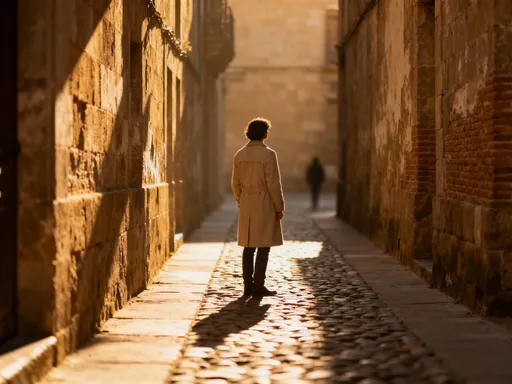
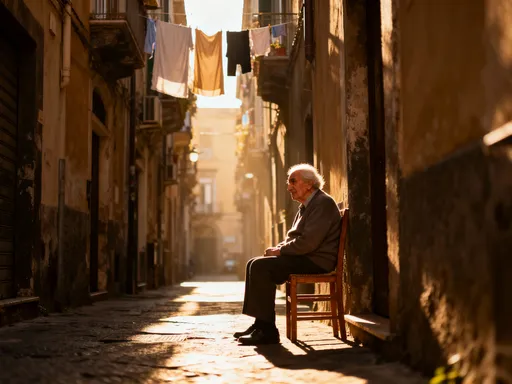
Just beyond the bustling Canebière, Marseille’s oldest neighborhood unfolds like a secret whispered through time. Le Panier, believed to be one of the oldest continuously inhabited districts in Europe, dates back over 2,600 years to its founding by Greek settlers. Today, it’s a vibrant tapestry of past and present, where cobblestone alleys wind upward like ribbons, and every turn reveals something unexpected. Pastel-painted houses lean gently against one another, their shutters wide open to the light. Flower boxes overflow with geraniums, and laundry flutters like colorful flags between buildings.
Once a working-class enclave, Le Panier has evolved into a creative sanctuary without losing its edge. Artists, potters, and independent designers have opened small studios tucked into ancient doorways. The Place des Moulins, a triangular square anchored by a striking spiral staircase, remains a social heart. Locals gather here in the late afternoon, children chase pigeons, and an elderly man often plays accordion near the fountain. It’s a place of daily rituals, not staged performances.
One of the most iconic landmarks, La Vieille Charité, is a 17th-century almshouse transformed into a cultural center. Its Andalusian-style courtyard, with arched white stonework and a sky-blue dome, offers a moment of serene beauty amid the urban bustle. Inside, rotating exhibitions often highlight Mediterranean art and history, connecting Marseille’s present to its diverse roots. But the true magic of Le Panier lies beyond the guidebook highlights. It’s in the hidden courtyards where ivy climbs forgotten walls, in the sudden mural of a woman’s face watching you from a narrow passageway, in the scent of thyme drifting from a hidden garden.
Walking through Le Panier feels like moving through a living collage. There are no grand boulevards here—just intimate spaces that invite slow exploration. You won’t find chain stores or tourist traps. Instead, you’ll stumble upon a tiny bookstore with hand-lettered signs, a ceramicist shaping bowls in an open workshop, or a grandmother watering her plants from a third-floor balcony. This is urban life at human scale. For the 30- to 55-year-old traveler—often juggling family, work, and the need for meaningful escape—Le Panier offers a rare gift: the chance to slow down, to notice, and to reconnect with the quiet poetry of everyday life.
Rooftop Culture: Elevated Views Without the Crowds
Marseille’s topography is its secret advantage. Built on a series of hills sloping down to the Mediterranean, the city offers natural vantage points at nearly every turn. While most visitors head straight to Notre-Dame de la Garde for the panoramic view, those in the know seek out quieter, more personal perspectives. Rooftops, terraces, and hillside parks provide sweeping vistas without the tour groups and long queues. These elevated spaces are not just for sightseeing—they’re part of Marseille’s social fabric.
Take Parc Longchamp, for example. Nestled in the 4th arrondissement, this 19th-century park was designed as a grand water garden, complete with fountains, arcades, and shaded walkways. At its eastern edge, the land rises gently, offering a natural amphitheater with a view of the city stretching toward the sea. Locals come here in the late afternoon with books, picnics, or just a bottle of water to watch the light shift over the rooftops. It’s a place of quiet contemplation, where the rhythm of the city can be felt rather than heard.
Near Cours Julien, a bohemian hub known for its street art and independent boutiques, several cafés and bars have rooftop terraces that open at sunset. These aren’t flashy nightclubs, but low-key spots where friends gather with glasses of rosé or mint tea. The view includes a patchwork of terracotta roofs, satellite dishes, and the occasional palm tree swaying in the breeze. From here, you can see the Basilique de la Garde glowing in the distance, a constant reminder of the city’s spiritual anchor.
What makes these rooftop experiences special is their accessibility. You don’t need a reservation or a ticket. You just need to wander, to look up, and to follow the sound of laughter from above. Some of the best views come from public staircases that climb the hills of the 6th and 7th arrondissements. These pathways, often lined with bougainvillea and potted herbs, lead to dead-end lookouts where couples sit in silence or artists sketch the skyline. In Marseille, elevation isn’t reserved for the elite—it’s woven into the daily life of the city, available to anyone willing to climb.
Public Spaces That Breathe: Parks, Squares, and Everyday Life
If Le Panier is the city’s historic heart, its parks and plazas are its lungs. Marseille doesn’t just have public spaces—it lives in them. Unlike cities where green areas feel like afterthoughts, here, parks are central to the urban experience. Parc Borély, stretching along the southern edge of the city, is a prime example. Once a private estate, it now welcomes joggers, dog walkers, and families on weekends. The park features formal gardens, a small lake, and shaded paths that wind beneath century-old trees. It’s not manicured to perfection, but that’s part of its charm. Leaves crunch underfoot, benches are slightly weathered, and the occasional squirrel darts across the path.
Place Castellane, at the intersection of several major boulevards, functions as a dynamic urban crossroads. The large roundabout is surrounded by cafés, kiosks, and wide sidewalks that encourage lingering. In the morning, commuters pass through with purpose. By midday, students sit on the steps with textbooks. In the evening, the square transforms as locals gather to socialize before dinner. The tram glides through the center like a quiet observer, its presence felt but not disruptive. This seamless integration of transit and public life is a hallmark of Marseille’s urban design.
What sets these spaces apart is their inclusivity. You’ll see grandmothers pushing strollers, teenagers playing guitar, and retirees engaged in heated chess matches. No one is out of place. These are not curated experiences for visitors—they are real, unfiltered moments of community. Even the smaller plazas, like Place Jean Jaurès or Place Jeanne d’Arc, serve as neighborhood anchors, where the rhythm of daily life plays out in full view.
For the thoughtful traveler, observing these spaces offers deep insight into Marseille’s character. The city doesn’t segregate people by age, income, or background. Instead, it provides shared ground—literally—where life unfolds in all its messy, beautiful variety. To visit Marseille and skip these spaces is to miss its soul. Sitting on a bench in the sun, watching the world pass by, becomes a form of quiet participation. It’s a reminder that urban life, at its best, is not about monuments or landmarks, but about the simple act of being together.
Street Art as Urban Language: More Than Just Paint
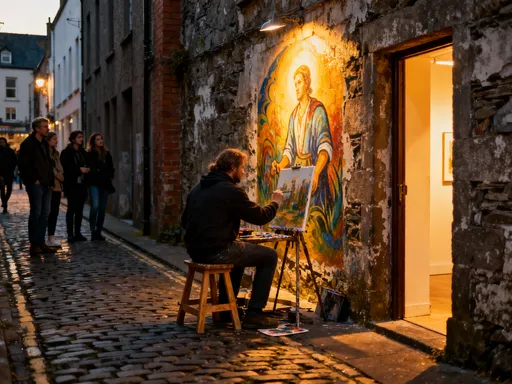
In Marseille, walls talk. And what they say is often more honest than any guidebook. From the alleys of Le Panier to the industrial edges of the 13th arrondissement, street art is not decoration—it’s dialogue. Large-scale murals depict faces of forgotten heroes, abstract patterns inspired by North African textiles, or bold statements about migration, identity, and resilience. This is not vandalism; it’s a visual language spoken by a city that has always been a crossroads.
Cours Julien, often called the city’s creative epicenter, is where this language is most vibrant. Once a neglected area, it has become a canvas for local and international artists. A wall might feature a giant octopus with tentacles wrapping around a globe, symbolizing interconnectedness. Another shows a child holding a key, labeled “Demain” (Tomorrow). These works change frequently, with new pieces appearing almost monthly. What was a political statement last summer might be a whimsical forest scene this winter. This constant evolution keeps the city visually alive and intellectually engaging.
While guided street art tours are available—and informative—they can’t replicate the joy of discovery on foot. There’s something powerful about turning a corner and being confronted by a mural so vivid it feels three-dimensional. You stop. You look. You think. And in that moment, you’re not just seeing art—you’re engaging with the city’s conscience. Artists use public space to ask questions: Who belongs here? What does home mean? How do we remember the past?
For many residents, especially younger generations, these murals are a source of pride. They represent a city that values expression, diversity, and truth-telling. Even the city government has embraced this culture, commissioning legal walls and supporting festivals like “Marseille Street Art Tour.” The result is a dynamic, ever-changing gallery without walls, open 24 hours a day. In a world where so much public space is dominated by advertising, Marseille’s streets offer an alternative: art that challenges, comforts, and inspires.
Waterfront Reimagined: The Vieux Port’s Modern Pulse
The Vieux Port is the city’s beating heart, a natural harbor that has welcomed ships for over two millennia. Today, it remains the focal point of urban life, but not in the way you might expect. While postcard views of fishing boats and sailboats still dominate, the port has undergone a quiet transformation. Recent urban planning initiatives have prioritized pedestrians, cyclists, and sustainable transport. Wide walkways now line the quays, and vehicle access has been reduced to create a more open, breathable space.
At dawn, the port comes alive with fishermen unloading the night’s catch. The morning fish auction at Quai des Belges is a spectacle of speed and skill, with crates of sea bream, octopus, and red mullet changing hands in minutes. By midday, the same area buzzes with tourists and locals enjoying lunch at open-air cafés. In the evening, the mood shifts again—tables fill with friends sharing tapenade, anchovies, and glasses of crisp white wine as the sun dips below the horizon.
What’s remarkable is how tradition and innovation coexist here. Solar-powered electric shuttles now glide across the water, connecting the port to nearby attractions like the MuCEM and J4 Esplanade. Floating gardens, part of a pilot project to improve water quality and biodiversity, add a touch of green to the blue expanse. These additions don’t erase the port’s history—they enhance it, showing that a city can honor its past while moving forward.
The Vieux Port is also a model of inclusive design. Ramps and tactile paving make it accessible to all. Play areas for children, public art installations, and seasonal markets ensure that it remains a space for everyone, not just sightseers. Whether you’re watching a street performer near the Opera, buying fresh herbs from a floating market, or simply sitting on the edge with your feet dangling above the water, you’re part of the port’s ongoing story. It’s a reminder that urban waterfronts don’t have to be privatized or commercialized to be valuable—they can be shared, lively, and deeply human.
Moving Like a Local: Transport, Rhythm, and Hidden Routes
Getting around Marseille is an experience in itself. The city’s public transit system—buses, trams, and a compact metro—is efficient and well-connected. But the real magic happens when you step off the scheduled routes and into the rhythm of the streets. Walking is the best way to understand Marseille. The city rewards curiosity, and its network of stairs, alleyways, and hillside paths reveals secrets that no map can capture.
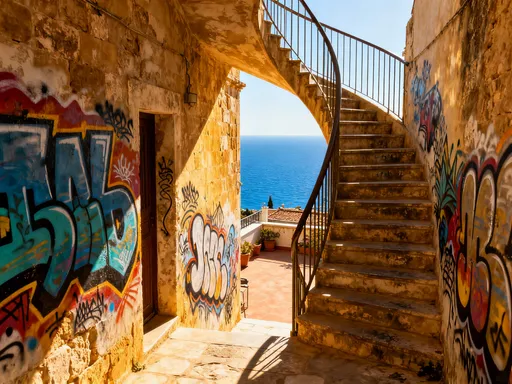
One of the first things visitors notice is the prevalence of stairs. Unlike flat cities, Marseille’s terrain demands movement in three dimensions. What looks like a short distance on a map can involve a steep climb. At first, it’s exhausting. But soon, you realize these stairs are more than obstacles—they’re connectors. A flight of steps might lead from a busy avenue to a quiet courtyard where an old man tends his lemon tree. Another might open onto a hidden viewpoint overlooking the sea. Locals use these routes daily, and learning them is a rite of passage for any serious explorer.
Biking, especially with e-bikes, has become increasingly popular. Services like Lime and Donkey Republic offer convenient rentals, making it easier to tackle the hills. Cycling along the Corniche Kennedy, a scenic road that hugs the coastline, is a favorite among residents. The sea breeze, the sound of waves, and the sight of sailboats in the distance create a sense of freedom that’s hard to match. Even short rides—from the port to the Cours Julien, or from La Plaine to the Parc Chanot—offer a deeper connection to the city’s texture.
But beyond physical movement, there’s a temporal rhythm to master. Markets open early and close by midday. Certain squares quiet down in the afternoon, only to come alive again at dusk. Understanding these patterns allows you to move *with* the city, not against it. It’s not about speed or efficiency—it’s about sync. When you learn to walk at the pace of Marseille, to pause when others pause, to linger over coffee the way locals do, you stop being a visitor. You become part of the flow.
Marseille’s Urban Space as a State of Mind
Marseille doesn’t hand you experiences on a silver platter. There are no perfectly staged photo ops, no curated itineraries that guarantee awe. Instead, it asks for something more valuable: attention. To truly know this city, you must lean in. Look closer. Listen. Feel the sun on your skin, the uneven stones underfoot, the hum of conversation in a crowded square. Its urban spaces aren’t designed for passive viewing—they’re meant to be lived in, touched, and absorbed.
Every corner holds the potential for a small revelation. A shared bench in a sunlit plaza. A sudden mural that makes you stop and think. A fisherman mending his net at dawn. These moments aren’t grand, but they’re real. And in a world that often feels artificial or rushed, that authenticity is transformative. For the 30- to 55-year-old woman—balancing responsibilities, seeking meaning, craving connection—Marseille offers a different kind of travel. Not escape, but engagement. Not perfection, but presence.
The city teaches a quiet lesson: beauty exists in the imperfect, the layered, the lived-in. It’s in the chipped paint, the tangled wires, the laughter from an open window. Marseille doesn’t hide its scars. It turns them into stories. And when you walk its streets with openness and curiosity, you become part of those stories too. You don’t just see the city—you feel it. And that feeling, once awakened, stays with you long after you’ve left the Mediterranean coast behind.