You Won’t Believe These Hidden Corners of Naples
Naples, Italy, is more than just a gateway to Pompeii or the Amalfi Coast—it’s a living canvas of culture, chaos, and raw beauty. Wandering its streets feels like stepping into a centuries-old story still being written. I went searching for moments that capture the soul of the city, not just its landmarks. What I found were photo spots bursting with authenticity—where every shadow, smile, and sunlit alley tells a deeper story. This is about seeing Naples through a lens that values feeling over filters. It’s about discovering a side of the city that doesn’t appear on postcards but lives in the rhythm of daily life, the warmth of human connection, and the quiet beauty hidden behind unassuming doors.
The Soul of the Street: Spaccanapoli’s Living Theater
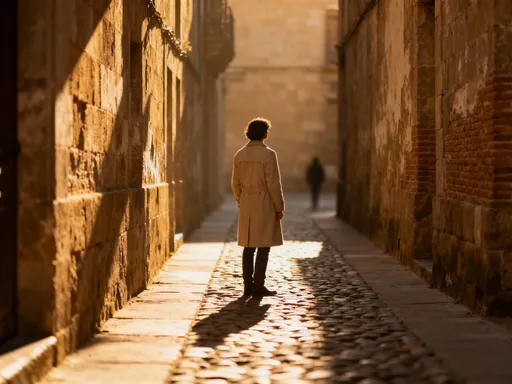
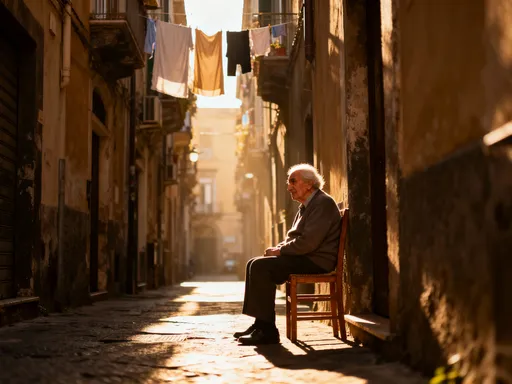
Spaccanapoli is not merely a street; it is the pulsing artery of historic Naples, slicing through the old city in a nearly straight line that has guided footsteps for over 700 years. As one walks its length, the sensation is less of touring and more of entering a continuous, open-air theater where life unfolds unscripted. Laundry lines stretch like aerial tapestries between buildings, children dart between fruit carts, and the scent of frying zeppole drifts from unseen kitchens. This is a place where time seems layered—medieval archways frame modern scooters, and 16th-century churches stand shoulder to shoulder with family-run bakeries. Every step offers a new composition: a weathered hand placing loaves in an oven, a cat curled on a sun-warmed stone windowsill, or an elderly woman calling down to a neighbor from a wrought-iron balcony.
What makes Spaccanapoli exceptional for photography is its vertical intimacy. The narrowness of the street creates natural frames, and the tall buildings allow for dramatic plays of light, especially during golden hour. When the sun begins to dip, its rays slip between rooftops, casting long shadows and illuminating patches of cobblestone in warm amber. This fleeting light lasts only minutes but transforms ordinary scenes into something transcendent. A simple doorway, when caught in that glow, becomes a portal to another era. For photographers, the key is patience and presence—waiting for the right moment when a passerby, a shaft of light, and a textured wall align to tell a story without words.
Equally important is the ethics of photographing people in such close quarters. While Neapolitans are generally warm and expressive, capturing their lives requires respect. A smile, a nod, or a quiet “posso fotografare?” goes a long way. Many locals appreciate genuine interest in their culture, especially when it’s shown with humility. The most powerful images from Spaccanapoli are not those taken from a distance with a telephoto lens, but those born from brief, human exchanges—a shared laugh with a street vendor, a moment of eye contact with an elder on a bench. These are the images that carry soul, not just scenery.
Hidden Courtyards and Forgotten Cloisters: Naples Off the Grid
Beyond the clamor of the streets lie Naples’ most poetic secrets—the hidden courtyards known as *cortili*. Tucked behind weathered doors and unmarked archways, these serene spaces offer a quiet counterpoint to the city’s relentless energy. Often part of ancient monasteries, noble palaces, or long-forgotten convents, they are remnants of a more contemplative Naples, where time slows and beauty reveals itself in quiet details. One such courtyard, nestled near the Church of Santa Chiara, opens like a secret garden. Ivy climbs marble columns, cracked frescoes whisper stories of devotion, and sunlight filters through a lattice of vines, casting delicate patterns on the stone floor.
Access to these spaces is not always advertised. Many are preserved and occasionally opened by local cultural associations or religious communities committed to restoration. Some require advance notice or participation in a guided visit, while others are revealed only to those who ask the right questions of shopkeepers or neighbors. This exclusivity adds to their allure—they are not tourist attractions but living relics, cared for by those who understand their value. For the patient traveler, the reward is a moment of stillness amid the urban rush, a chance to photograph not just architecture, but atmosphere.
Photographing a *cortile* is about capturing stillness. The light here is softer, more diffused, often entering from above through a skylight or open roof. This creates a natural spotlight effect, illuminating a single statue, a crumbling capital, or a patch of moss growing in a crack. A tripod can help in low light, allowing for longer exposures that emphasize texture and depth. But the most compelling shots often come from simplicity—a single chair placed in the center of the courtyard, a bird perched on a windowsill, or a shaft of morning light falling across an empty arcade. These images speak of absence and presence, of memory and continuity.
The emotional resonance of these spaces cannot be overstated. They remind visitors that Naples is not only a city of noise and motion but also one of reflection and grace. To photograph a hidden courtyard is to participate in an act of preservation—to bear witness to beauty that might otherwise go unseen. It is a reminder that some of the most powerful experiences in travel come not from grand vistas, but from quiet corners where history breathes.
The Vibrant Pulse of Mercato di Porta Nolana
While Mercato di Pignasecca draws the crowds, those seeking a more authentic glimpse into Neapolitan daily life often turn to Mercato di Porta Nolana. Located near the eastern edge of the historic center, this market thrives with a rhythm that feels less performative and more essential. Here, vendors sell not souvenirs, but sustenance—pyramids of blood oranges glisten under the morning sun, baskets overflow with wild fennel and bitter greens, and fishmongers display sea bream and octopus on beds of crushed ice. The air hums with baritone negotiations, the clang of metal scales, and the occasional burst of laughter. This is commerce as ritual, a daily gathering that binds the community together.
For photographers, Porta Nolana offers a feast of color, movement, and expression. The challenge lies in capturing its energy without reducing it to chaos. One effective technique is to focus on details—a hand arranging artichokes, a vendor’s weathered face framed by hanging sausages, or a child reaching for a piece of fruit. These close-ups tell the larger story of labor, care, and tradition. Wide-angle shots can also be powerful, especially when used to show the market in context—a row of women in aprons behind overflowing stalls, or the way sunlight cuts across the narrow street, highlighting a single vendor in profile.
Equally important is the approach to portraiture. Many vendors welcome being photographed, especially if approached with friendliness and respect. A simple compliment on their display or a purchase of a small item can open the door to a more meaningful interaction. Some may pose proudly, hands on hips, surrounded by their goods; others may continue working, allowing the camera to document them in motion. The key is to avoid intrusion—no sneaking shots from behind or using zoom lenses to capture private moments. The best market photographs are those taken with permission, born from connection rather than observation.
Mercato di Porta Nolana is also a testament to Neapolitan resilience. Despite economic challenges and urban decay, the market operates with unwavering consistency. It is a place where generations pass down knowledge, where relationships are built over decades of trade, and where food remains sacred. To photograph here is to honor that continuity—to show not just what Naples eats, but how it lives.
Churches with a Story: Where Light Meets Devotion
Naples is home to over 400 churches, a number that reflects not just religious tradition but a deep cultural identity rooted in faith, art, and communal memory. While many visitors flock to the grandeur of the Duomo or the treasures of the Certosa di San Martino, some of the most moving experiences can be found in lesser-known sanctuaries like San Gregorio Armeno. Famous for its nativity workshops, the church itself is a quiet sanctuary of gold leaf, candlelight, and centuries-old frescoes. Its chapels, dimly lit and richly adorned, offer a sense of intimacy that larger cathedrals often lack.
Photographing inside such spaces requires sensitivity. Flash is not only disruptive to worshipers but often prohibited, as it can damage delicate artworks. Instead, photographers are encouraged to work with natural light—the soft glow from stained glass, the flicker of votive candles, or the morning sun filtering through side windows. These light sources create a chiaroscuro effect, illuminating faces of saints in dramatic contrast while leaving corners in shadow. A higher ISO setting and a steady hand can yield beautiful results without compromising the sanctity of the space.
The religious art in these churches is not merely decorative; it is devotional. Statues of the Madonna are dressed in seasonal robes, adorned with real lace and jewels, and treated as living presences by the faithful. Capturing these details—a hand placing a flower at the base of a statue, a woman whispering a prayer, the intricate embroidery of a liturgical garment—reveals the emotional depth of Neapolitan Catholicism. It is a faith that embraces both sorrow and joy, that finds comfort in ritual, and that sees the divine in the tangible.
For the traveler, visiting these churches is not just about aesthetics but about understanding. The ornate interiors, the scent of incense, the sound of distant chanting—all contribute to an atmosphere of reverence that transcends tourism. Photographs taken here should reflect that solemnity, avoiding gimmicks or forced compositions. A single image of an empty pew bathed in light, or a close-up of a weathered prayer book, can convey more than a dozen wide-angle shots. These are spaces of reflection, and the best photographs honor that silence.
Street Art with Meaning: Beyond the Graffiti
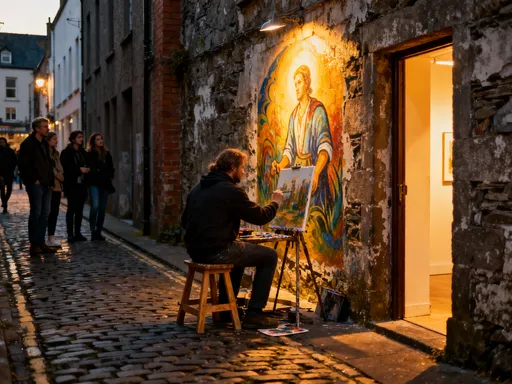
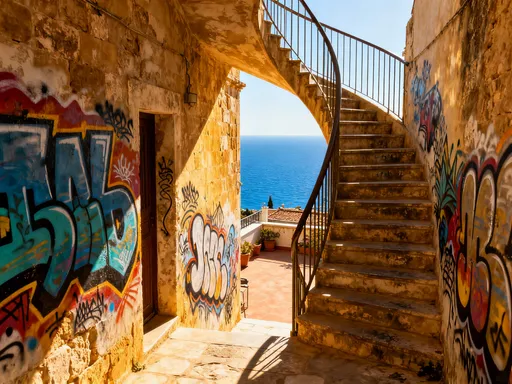
In the heart of Naples, particularly in neighborhoods like Quartieri Spagnoli and Forcella, walls are not just surfaces—they are storytellers. Once seen as signs of neglect, the city’s street art has evolved into a powerful form of cultural expression. Murals here do not merely decorate; they commemorate, challenge, and celebrate. One finds tributes to Diego Maradona, whose legacy transcends sport to symbolize hope and defiance; memorials to victims of the Camorra; and vibrant depictions of local saints and mothers holding their children. These works are not random acts of rebellion but deliberate visual narratives shaped by artists deeply connected to their communities.
What distinguishes Neapolitan street art is its emotional intelligence. Unlike generic graffiti, these murals often emerge from community initiatives, funded by local organizations or created in collaboration with residents. They appear on the sides of schools, housing projects, and abandoned buildings, transforming neglected spaces into open-air galleries. A mural in Forcella might depict a child flying a kite above crumbling balconies, a metaphor for resilience. Another in Quartieri Spagnoli shows a woman’s face half-covered in gold leaf, blending traditional iconography with contemporary commentary.
For photographers, these murals offer compelling subjects, but the best images go beyond the artwork itself. Using a wide-angle lens to include the surrounding environment—a clothesline strung across the street, a scooter parked below, an elder watching from a window—helps contextualize the art within daily life. The contrast between the vibrant paint and the weathered plaster tells a story of beauty emerging from hardship. Black-and-white photography can also be effective, stripping away color to emphasize form, texture, and emotion.
Perhaps most importantly, photographing street art in Naples is an invitation to listen. Many murals come with stories shared by locals—why a particular figure was chosen, who the artist was, what event inspired the piece. Engaging with these narratives enriches the image, turning a simple photograph into a document of memory and resistance. In a city where history is always present, street art becomes another chapter in Naples’ ongoing story.
The View from Above: Campanile and Secret Terraces
To truly grasp the scale and spirit of Naples, one must see it from above. From ground level, the city feels overwhelming—a tangle of alleys, laundry lines, and honking scooters. But from a height, its beauty reveals itself in patterns: rooftops tiled in terracotta, laundry fluttering like flags, and the distant, ever-present silhouette of Mount Vesuvius. While the popular Castel Sant’Elmo offers panoramic views, more intimate vantage points exist for those willing to seek them out. A quiet campanile near the Duomo, accessible through a modest donation and a narrow staircase, provides one of the most moving perspectives in the city. From its bell tower, the historic center unfolds like a living map, with church domes, market stalls, and sunlit courtyards visible in every direction.
Another option is a rooftop cafe in the Chiaia district, where tables are set against a backdrop of sea and sky. Here, one can sip espresso while watching the light shift over the Bay of Naples, the colors deepening from gold to rose as dusk approaches. These elevated spaces offer more than visual reward—they provide emotional clarity. The noise fades, the pace slows, and the city, for a moment, feels coherent. Photographing from above requires attention to timing. Early morning offers crisp air and soft light, while late afternoon brings golden hues and long shadows. But the most magical hour is twilight, when windows begin to glow and the city transitions from day to night.
These views are not just picturesque; they are symbolic. Vesuvius, visible in nearly every panorama, serves as a constant reminder of Naples’ fragility and endurance. The volcano looms not as a threat, but as a witness—to centuries of eruption and rebirth, to cultures rising and falling, to a people who continue to build, create, and live despite uncertainty. Capturing that duality—beauty and danger, chaos and order—is the essence of photographing Naples from above. A well-composed shot from a campanile or terrace does not merely show a skyline; it tells a story of resilience written in stone, light, and shadow.
Why Authenticity Beats Perfection in Travel Photography
In an age of curated feeds and flawless filters, the true value of travel photography lies not in perfection, but in authenticity. The most memorable images from Naples are rarely the most technically precise. They are the slightly blurred shot of a child chasing a ball down a cobbled alley, the close-up of a baker’s hands shaping pizza dough with practiced ease, or the candid laugh of a fishmonger mid-conversation. These unposed moments capture not just a place, but a feeling—the warmth, the rhythm, the imperfection that makes Naples feel alive.
Photographing with authenticity means slowing down. It means putting the camera down sometimes, engaging in conversation, accepting a cup of coffee from a stranger, and letting moments unfold naturally. It means resisting the urge to chase the “perfect” shot and instead embracing the unexpected—the sudden rainstorm that sends people running for cover, the impromptu music from a balcony, the old man feeding pigeons in a quiet piazza. These are the scenes that stay with you, not because they are beautiful in a conventional sense, but because they are real.
Moreover, authentic photography is an act of respect. It honors the people and places being documented, not as props for a traveler’s narrative, but as subjects with their own stories. It acknowledges that culture is not a performance for tourists, but a lived experience. When a photograph captures genuine emotion—joy, weariness, pride, contemplation—it becomes more than an image. It becomes a tribute.
In Naples, where history, faith, and daily life intertwine so deeply, photography takes on a quiet significance. Each image, when taken with care and intention, becomes part of a larger effort to preserve and understand. The city resists being neatly packaged or easily defined. It is messy, loud, and unpredictable. And that is exactly why it must be seen, not through a lens of perfection, but through one of presence. The hidden corners of Naples are not just places to visit—they are invitations to connect, to witness, and to remember. And in that remembering, we honor not only the city, but the humanity it so vividly reflects.