Lost in Paradise: What Zanzibar’s Hidden Corners Taught Me
Zanzibar is more than postcard-perfect beaches and spice-scented air—it’s a place where every alleyway, coastline, and coral reef tells a story. I went searching for scenic beauty, but found something deeper: a rhythm of life shaped by tides, tradition, and untouched nature. From quiet coves to vibrant marine worlds, Zanzibar reveals its magic slowly, rewarding those who wander beyond the obvious. This is not just travel—it’s discovery in its purest form.
Arrival with Expectations – And How Zanzibar Shattered Them
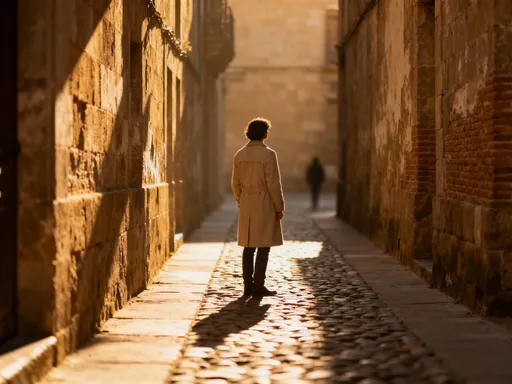
Stepping off the plane into the warm, humid air of Zanzibar, one might expect to be greeted by the predictable rhythms of a tropical getaway: palm trees swaying, music playing, and a quick transfer to a beachfront resort. But Zanzibar resists such simplification. The island does not reveal itself easily. Its true character unfolds gradually, beginning in the maze-like alleys of Stone Town, where history is not preserved behind glass but lives in the chipped paint of century-old doors and the laughter echoing from open courtyards. The first surprise for many travelers is how little this place resembles the generic imagery of island vacations. Instead of sterile luxury, there is texture—layers of culture, trade, faith, and resilience etched into every wall and whispered in the Swahili spoken on street corners.
The contrast between expectation and reality becomes clear almost immediately. While tourists often arrive dreaming of sun-drenched lounging, they quickly realize that Zanzibar offers something richer than passive relaxation. The island’s beauty is not just visual—it is tactile, auditory, aromatic. The scent of cloves drying in the sun, the rhythm of dhow sails flapping in the breeze, the coolness of coral stone under bare feet—all contribute to an experience that engages the entire body. This multisensory immersion transforms the journey from mere sightseeing into a deeper form of connection. Zanzibar teaches visitors to slow down, to observe, to listen. It challenges the idea that paradise must be pristine and untouched, showing instead that true enchantment often lies in the lived-in, the weathered, the authentic.
What makes this island remarkable is not only its natural splendor but also the way its people carry forward centuries of tradition without performing it for outsiders. There is no forced authenticity here—only a quiet confidence in a way of life shaped by the Indian Ocean’s tides and the mingling of civilizations. Travelers who come seeking exoticism may leave with something more valuable: humility. Because Zanzibar does not exist to fulfill fantasies. It simply is. And in that being, it invites those who visit to be present, to shed assumptions, and to discover not just a destination, but a different way of experiencing the world.
Stone Town: Where History Breathes Through Cracked Walls
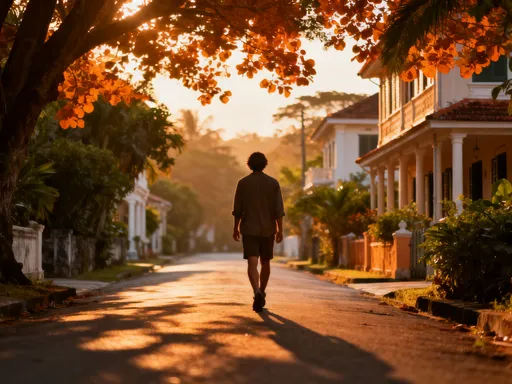
Wandering through Stone Town is like walking through a living museum where every doorway tells a story. The narrow streets, paved with worn coral stone, wind unpredictably, opening suddenly into small squares or leading to hidden courtyards shaded by banana trees. The architecture is a testament to centuries of cultural fusion—Swahili design harmonizing with Arab arches, Indian filigree, and British colonial symmetry. Wooden doors, intricately carved with geometric patterns and Quranic inscriptions, stand as silent narrators of a complex past. Many were once entrances to merchant homes, symbols of wealth and status during Zanzibar’s peak as a trading hub for spices, ivory, and more. Today, they serve as reminders of an era when this island sat at the crossroads of continents and civilizations.
As a UNESCO World Heritage Site, Stone Town is protected not just for its aesthetics but for its historical significance. Places like the House of Wonders, once the tallest building in East Africa, offer insight into the island’s political evolution. Though much of the interior has been rebuilt due to fire damage, its imposing façade and ocean-facing balcony evoke the grandeur of the Omani sultans who once ruled from here. Nearby, the Old Fort, originally built by the Portuguese in the 17th century and later repurposed by Omani rulers, now hosts cultural events and artisan markets. These landmarks do more than attract tourists—they anchor the community in a shared narrative, one that acknowledges both pride and pain.
Yet the true magic of Stone Town lies not in its monuments but in its everyday moments. A woman balancing a basket of ripe mangoes on her head, children playing soccer in a cobblestone alley, the call to prayer drifting over rooftops at sunset—these are the rhythms that give the city its soul. Unlike some heritage sites that feel frozen in time, Stone Town pulses with life. Shops sell everything from handwoven baskets to imported electronics. Cafés serve both strong Tanzanian coffee and fresh coconut water. The past is not separated from the present; it is woven into it. For travelers, this creates a rare opportunity: to witness history not as a distant relic, but as a continuous thread running through daily existence. In Stone Town, architecture is not just landscape—it is memory made visible.
Spice Farms: A Journey Through Scent and Taste
No visit to Zanzibar is complete without stepping into the lush green embrace of a spice farm. Nestled in the island’s fertile interior, these farms are open-air classrooms where knowledge is passed down through generations. Cloves, vanilla, cinnamon, nutmeg, turmeric, and black pepper grow side by side, their scents mingling in the humid air. Guided tours take visitors along shaded trails, where guides—often local farmers—pluck leaves, break open pods, and invite guests to crush, smell, and taste. A single leaf of lemon verbena rubbed between the fingers releases a burst of citrus. A freshly scraped vanilla pod offers a sweet, floral aroma far removed from the extract found in supermarkets. This is education through immersion, where learning happens not from a screen or book, but through direct contact with the earth.
Zanzibar’s reputation as the “Spice Island” is well earned. For centuries, its tropical climate and rich soil have made it ideal for cultivating aromatic crops. During the 19th century, Omani rulers expanded plantations across the island, turning spice production into a major economic force. Today, while global markets have changed, many small farms continue traditional methods, relying on hand harvesting and sun drying. Visiting these farms offers more than sensory delight—it fosters appreciation for the labor and knowledge behind every jar of spice on a kitchen shelf. It also highlights how deeply flavor is tied to identity. In Zanzibari cuisine, spices are not mere seasoning; they are storytellers, carrying influences from Arabia, India, and the African coast.
The experience of walking through a spice farm lingers long after the tour ends. The scent of crushed cinnamon bark, the warmth of fresh ginger, the pungency of raw turmeric—all leave an imprint on the memory. More importantly, these farms illustrate how agriculture can be sustainable, educational, and deeply connected to culture. They are not industrial operations but living spaces where families grow food, teach visitors, and preserve traditions. For travelers, especially those accustomed to supermarket aisles and packaged goods, this connection to origin is both grounding and enlightening. It reminds us that what we consume has roots—literally and figuratively—and that understanding those roots enriches not just our meals, but our lives.
Nungwi & Kendwa: Northern Beaches That Feel Like Secrets
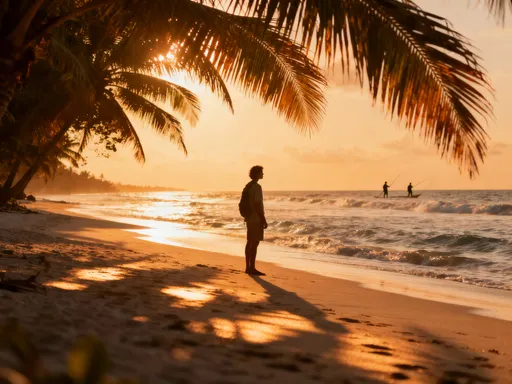
While many tourists flock to the east coast for its famous sunsets, those who venture to the northern tip of Zanzibar are rewarded with a different kind of beauty—one defined by tranquility, clarity, and authenticity. Nungwi and Kendwa, two neighboring villages on the island’s northern shore, offer powdery white sands and turquoise waters that seem to glow under the sun. But what sets them apart is their atmosphere. Unlike more developed areas, these beaches retain a low-key charm. Resorts are built with local materials, blending into the landscape rather than dominating it. Fishermen still launch their colorful wooden dhows at dawn, returning with nets full of snapper and kingfish. The rhythm of life here is dictated by the tides, not tourist schedules.
The waters along this coast are notably calmer and clearer, making them ideal for swimming and snorkeling. Coral reefs lie just offshore, protecting the shoreline and supporting marine life. At low tide, shallow pools form along the sand, revealing starfish and small reef fish. Children wade through them, laughing as they gently observe the creatures before letting them go. Sunrise, rather than sunset, is the daily spectacle here. As the sky shifts from indigo to gold, the ocean catches fire with soft light, casting long shadows across the beach. There is something intimate about this moment—it feels personal, unperformed, untouched by commercialization.
What makes Nungwi and Kendwa special is not just their natural beauty but their sense of balance. Tourism supports the local economy, yet the community maintains control over its pace and character. Visitors are welcomed, but not catered to in an artificial way. There are no loud beach parties or crowded water sports zones—just the sound of waves, the cry of gulls, and the occasional strum of a guitar from a nearby café. For travelers seeking relaxation without detachment, these villages offer a rare harmony between comfort and authenticity. They prove that luxury does not require excess; sometimes, it is found in simplicity, in space, in silence.
Jozani Chwaka Bay: Forest Whispers and Monkeys in the Mist
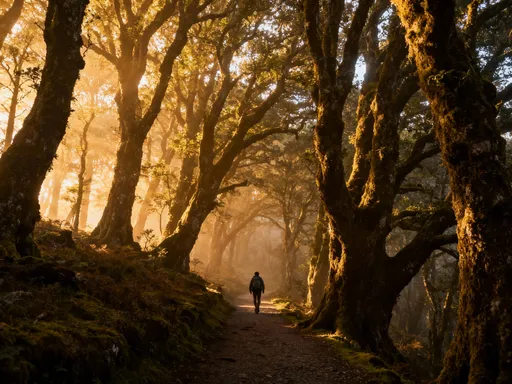
Deep in the heart of Zanzibar lies Jozani Chwaka Bay National Park, the island’s only official national park and a sanctuary for biodiversity. Unlike the sun-drenched beaches, this landscape is shaded, humid, and alive with quiet movement. A network of wooden boardwalks winds through dense forest and mangrove swamps, allowing visitors to explore without disturbing the delicate ecosystem. The air is thick with the scent of damp earth and decaying leaves. Sunlight filters through the canopy in dappled patches, illuminating spider webs and fluttering butterflies. It is a place of stillness, where even conversation seems to lower in volume out of respect for the surroundings.
The park is most famous for being the home of the Zanzibar red colobus monkey, an endangered primate found nowhere else on Earth. These striking animals, with their rust-colored fur and expressive faces, move gracefully through the trees, often in large social groups. Unlike timid wildlife in other regions, the red colobus have grown accustomed to quiet observers and may pause to look down curiously. Guided walks increase the chances of sightings while ensuring minimal disruption. Rangers, knowledgeable and passionate, share facts about the monkeys’ diet, behavior, and conservation status, turning each encounter into an educational moment.
But the forest offers more than primates. Mangrove ecosystems, crucial for coastal protection and fish nurseries, stretch into brackish water, their tangled roots providing shelter for crabs, birds, and juvenile fish. Butterflies flit between blossoms, and chameleons cling motionless to branches, masters of camouflage. Every element of this environment is interconnected, a reminder of nature’s intricate balance. For visitors, especially those from urban environments, Jozani offers a rare opportunity to reconnect with the wild in a safe, accessible way. It is not about thrill or adventure, but about presence—about learning to move slowly, to watch closely, to appreciate the quiet drama of life unfolding in the undergrowth.
Snorkeling at Menjoruni Reef: Beneath the Surface, a Living Mosaic
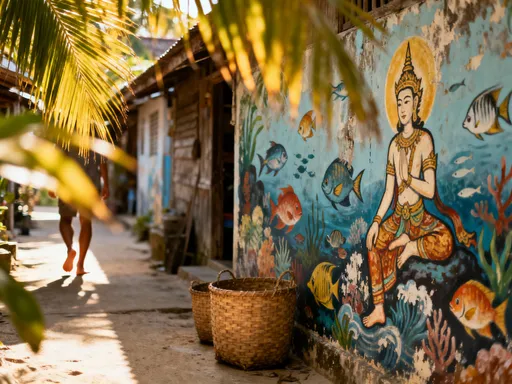
Off the southern coast of Zanzibar, near the village of Jambiani, lies Menjoruni Reef—a vibrant underwater world protected as part of a marine conservation zone. Snorkeling here is like floating above a living mosaic. Coral formations in shades of purple, orange, and green sway gently with the current, hosting an astonishing variety of marine life. Parrotfish nibble at algae, their beak-like mouths making soft crunching sounds. Angelfish glide in pairs, their striped bodies flashing in the sunlight. Occasionally, a green sea turtle passes by, calm and unhurried, as if aware of its ancient lineage. The water is clear and warm, allowing even novice snorkelers to fully appreciate the scene below.
What makes this experience truly meaningful is the awareness that such beauty is not guaranteed. Coral reefs worldwide face threats from climate change, pollution, and overfishing. In Zanzibar, local organizations and community-led initiatives work to protect these fragile ecosystems. Buoy lines prevent boats from anchoring on coral, and education programs teach both residents and visitors about sustainable practices. Some tours include brief talks on reef conservation, emphasizing that every traveler has a role to play—whether by using reef-safe sunscreen, avoiding touching marine life, or supporting eco-conscious operators.
The emotional impact of snorkeling at Menjoruni is profound. There is a sense of privilege in witnessing a habitat that remains largely intact, a feeling akin to stepping into a hidden garden. The silence underwater, broken only by the sound of one’s breath and the distant crackle of snapping shrimp, fosters a meditative state. Time slows. Worries recede. In that moment, the connection between human and nature feels immediate and sacred. It is a powerful reminder that conservation is not just a scientific endeavor—it is an act of reverence for a world that sustains us in ways we are only beginning to understand.
Beyond the Guidebook: Finding Stillness in Unmapped Spots
Some of the most memorable moments in Zanzibar happen not at famous landmarks, but in the spaces between them. On a quiet stretch of beach near Paje, where kitesurfers are absent in the early morning, the sand is undisturbed, marked only by the tracks of crabs and the occasional heron. In Michamvi, on the island’s east coast, a simple wooden bench overlooks a secluded bay where fishing boats bob gently at anchor. These places are not listed in every travel guide, yet they offer something invaluable: stillness. They are spots where the mind can rest, where the soul can breathe, where the act of being—rather than doing—becomes the purpose of the journey.
Discovering such places often comes through conversation. A local vendor at a market might mention a quiet cove where families gather on weekends. A guesthouse owner may point to a path leading to a hidden viewpoint overlooking the sea. These recommendations are not part of curated tours; they are gifts of trust, offered when a traveler shows genuine interest in the place and its people. In these exchanges, tourism transforms from extraction to connection. The traveler is no longer just an observer but a participant in a shared moment of hospitality.
These unmapped spots teach an essential lesson: that discovery is not about checking off destinations, but about cultivating presence. It is found in the way sunlight dances on water, in the sound of waves at dawn, in the smile of a child offering a seashell. They remind us that the most meaningful travel experiences are often unplanned, unphotographed, unshared on social media. They belong only to the moment, to the memory. In a world that glorifies speed and productivity, Zanzibar’s hidden corners offer a different rhythm—one of slowness, of listening, of belonging, even if only for a short while.
Conclusion: Why Zanzibar Stays With You
Zanzibar does not leave you unchanged. Its beauty is not fleeting; it settles into your being, reshaping how you see not just islands, but the act of travel itself. This is a place where scenic splendor is inseparable from culture, history, and ecological wonder. To walk through Stone Town is to feel centuries of trade and tradition. To taste a freshly picked clove is to taste the island’s soul. To float above a coral reef is to witness a world older and more complex than our own. These experiences, when woven together, create a journey of depth—one that resists the checklist mentality and instead invites mindfulness, curiosity, and respect.
The true gift of Zanzibar is its invitation to travel differently. It asks us to move slowly, to engage fully, to listen more than we speak. It shows that paradise is not a postcard, but a living, breathing reality shaped by people, nature, and time. In a world increasingly dominated by fast tourism and curated experiences, Zanzibar stands as a quiet alternative—a place where authenticity is not performed, but lived.
For the thoughtful traveler, especially one seeking meaning beyond the surface, Zanzibar offers a rare opportunity: to discover not just a destination, but a deeper way of being. It reminds us that the most profound journeys are not measured in miles, but in moments of connection—between cultures, between species, between self and world. So go to Zanzibar. But do not just see it. Feel it. Let it change you. Because once you’ve heard the forest whisper, tasted the spice on your tongue, and watched the sunrise paint the ocean in gold, you carry a piece of it with you—forever.